Posted on

El análisis en el fútbol profesional: una visión desde dentro del Sevilla Fútbol Club

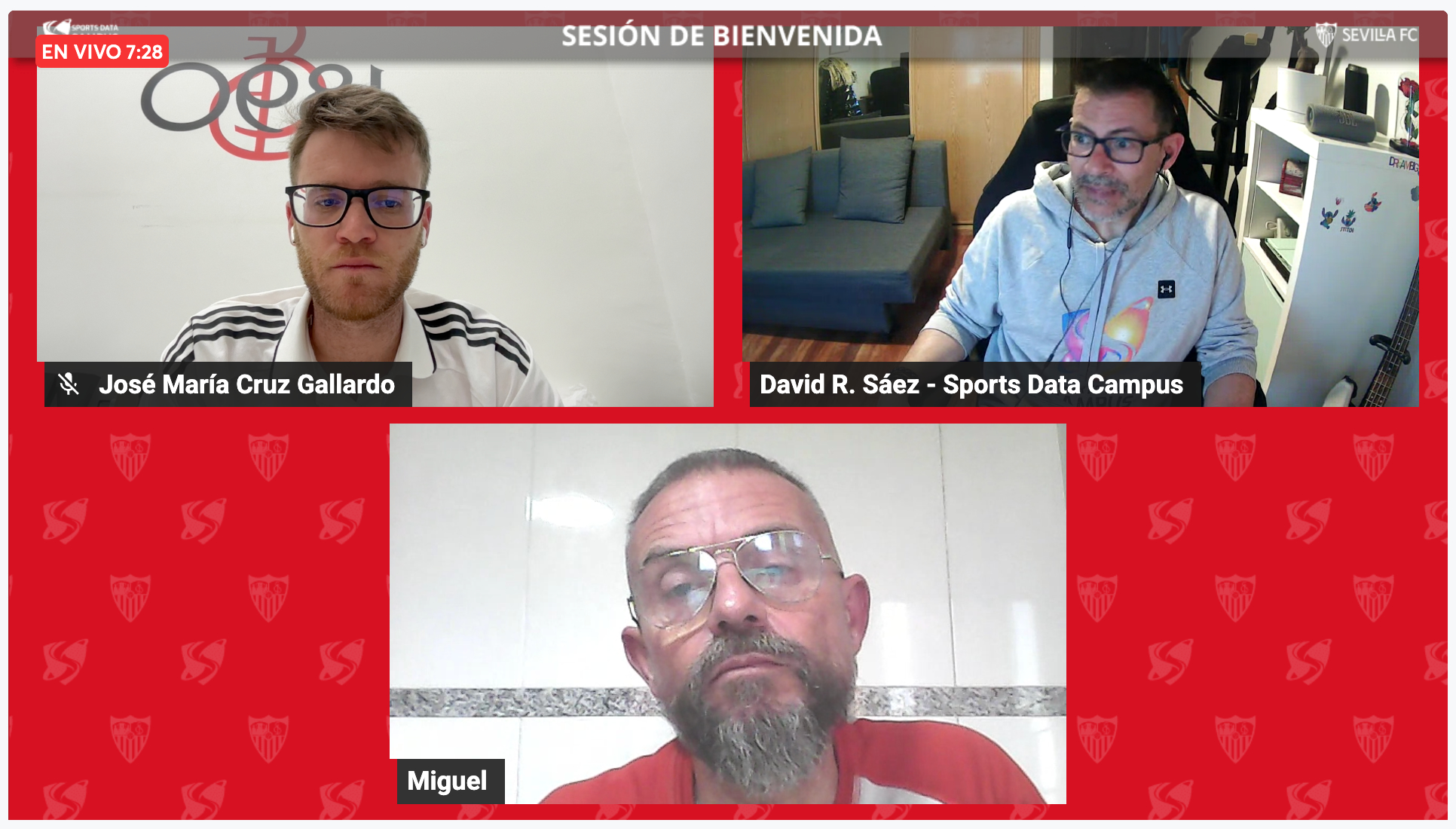
En el marco del Máster en Big Data aplicado al scouting en fútbol, los profesionales del área de análisis del Sevilla Fútbol Club compartieron una sesión en la que trasladaron, desde una perspectiva práctica y real, cómo se estructura y evoluciona el trabajo de análisis dentro de un club de élite.

La charla permitió a los alumnos conocer no solo herramientas o metodologías, sino también el contexto organizativo, la evolución del rol del analista y la importancia estratégica del dato en el fútbol moderno.

Un departamento clave dentro de la estructura del club

El área de análisis se integra dentro del departamento de innovación deportiva, lo que refleja una idea fundamental: el análisis ya no es un complemento, sino una pieza estructural dentro de la toma de decisiones deportivas.

Desde esta posición, el equipo de análisis trabaja de forma transversal con diferentes áreas del club:

  • Dirección deportiva
  • Primer equipo
  • Cantera
  • Departamentos de rendimiento y desarrollo
  • Departamento médico.
  • Departamento financiero y recursos humano.
  • Departamento de comunicación. 
  • Área de datos.

Esta ubicación permite que el análisis no se limite al corto plazo (resultado inmediato), sino que tenga un impacto en el desarrollo del talento, la planificación deportiva y la optimización de recursos.

Perfiles multidisciplinares: la clave del éxito

Uno de los aspectos más destacados de la sesión fue la importancia de construir equipos con perfiles diversos. Lejos de un modelo único de analista, el departamento está formado por profesionales con distintas especializaciones:

  • Expertos en análisis táctico del juego
  • Especialistas en datos y programación
  • Profesionales del ámbito del rendimiento físico
  • Perfiles híbridos con conocimientos en varias áreas

Esta combinación permite generar una visión 360º del jugador y del juego, integrando lo que ocurre en el campo con lo que reflejan los datos.

El mensaje para los alumnos es claro: el futuro del sector pasa por la combinación de conocimiento futbolístico y capacidades analíticas, junto con una actitud constante de aprendizaje.

La evolución del análisis: de “figura desconocida” a pilar estratégico

Uno de los puntos más interesantes fue la reflexión sobre cómo ha evolucionado el rol del analista en los últimos años.

Hace no tanto tiempo, el analista era percibido como una figura externa, incluso con cierta desconfianza por parte de los cuerpos técnicos. Sin embargo, gracias al desarrollo de metodologías y herramientas, el análisis ha pasado a convertirse en un elemento fundamental dentro del ecosistema del fútbol.

Esta evolución se ha producido en varios niveles:

  • Tecnológico
    • De procesos manuales a automatización
    • Uso de herramientas como Power BI o lenguajes como Python
    • Implementación de sistemas de tracking automático
  • Metodológico
    • De informes estáticos a dashboards dinámicos
    • De datos aislados a modelos de análisis complejos
    • Creación de indicadores de rendimiento y sistemas de scoring
  • Organizativo
    • Integración del analista dentro de la estructura del club
    • Mayor interacción con múltiples departamentos
    • Participación en la toma de decisiones

El objetivo ya no es simplemente recolectar datos, sino transformarlos en información útil y accionable.

El dato como motor de decisión

Durante la sesión se hizo especial hincapié en una idea clave:


“El dato no es el fin, es el medio.”

El verdadero valor del análisis reside en la capacidad de convertir datos en conocimiento que impacte en:

  • La mejora del rendimiento individual y colectivo
  • La identificación y evaluación de talento
  • La toma de decisiones en scouting
  • La optimización de procesos internos
  • En la toma de decisión ejecutiva.

En este contexto, se destacó el desarrollo de herramientas como:

  • Modelos de scoring por posición
  • Sistemas de comparación entre jugadores y equipos
  • Bases de datos enriquecidas mediante procesos propios (ETL y minería de datos)

Además, la automatización de procesos permite liberar tiempo para que los analistas se centren en tareas de mayor valor añadido.

El día a día del analista: planificación y mejora continua

Otro de los puntos clave fue la explicación del trabajo diario dentro del departamento.

El proceso comienza en pretemporada, donde se definen los objetivos tanto operativos como estratégicos. A partir de ahí, el trabajo se desarrolla de forma estructurada durante toda la temporada:

  • Apoyo constante a los cuerpos técnicos
  • Análisis de partidos y jugadores
  • Elaboración de informes dinámicos
  • Revisión y mejora de procesos
  • Adaptación a cambios dentro del club

Este enfoque refleja una cultura de mejora continua, donde cada temporada se convierte en una oportunidad para evolucionar tanto a nivel individual como colectivo.

Salidas profesionales reales

Uno de los mensajes más motivadores para los alumnos fue la evidencia de que el camino hacia el fútbol profesional es posible.

Desde el propio departamento se destacó que:

  • Alumnos del máster han realizado prácticas en el club
  • Muchos de ellos han terminado trabajando en estructuras profesionales
  • Existen casos de éxito en clubes nacionales e internacionales

Esto refuerza la idea de que la formación especializada, combinada con experiencia práctica, puede convertirse en un auténtico trampolín hacia la industria del fútbol.

De la formación al fútbol profesional: el siguiente paso

La sesión dejó una idea clara: el fútbol actual ya no se entiende sin el análisis y el uso inteligente del dato.

El Máster en Big Data aplicado al scouting en fútbol se posiciona como una formación alineada con esta realidad, ofreciendo a los alumnos no solo conocimientos técnicos, sino también una conexión directa con el entorno profesional.

En un sector cada vez más competitivo, la combinación de formación, especialización y experiencia práctica marca la diferencia. Y este tipo de iniciativas acercan a los alumnos a ese objetivo: convertirse en profesionales del fútbol del presente y del futuro.

Próximas oportunidades

📅 El próximo 24 de marzo comienza la X edición del Máster en Big Data aplicado al scouting en fútbol, una nueva oportunidad para formarse en un sector en plena expansión.

📊 Además, el 26 de marzo se celebrará el Sport Data Forum, un evento de referencia donde profesionales y alumnos podrán seguir aprendiendo, compartir conocimiento y generar networking dentro de la industria.

Posted on

Launch of the 10th Edition of the Master’s in Big Data Applied to Football Scouting

This initial session served as an institutional meeting point between the students and the faculty, providing an overview of the academic objectives, methodology, and key areas of focus for what is a particularly significant edition, further consolidating the program’s trajectory following the success of previous cohorts.

The master’s program maintains its strong commitment to academic excellence and specialized training, equipping participants with advanced knowledge in Big Data, machine learning, data analysis, and video analysis, as well as proficiency in key tools such as R and Python, all of which are essential for modern decision-making processes in professional football.

Throughout the program, students will develop competencies related to talent identification, the optimization of scouting processes, and the interpretation of analytical models, contributing to more efficient and strategic information management within sports environments.

As part of this new edition, the Sport Data Forum will take place on March 26 at the Ramón Sánchez-Pizjuán Stadium, bringing together professionals, experts, and industry stakeholders to discuss the latest trends in innovation, technology, and data analytics applied to sport.

With this tenth edition, the program reinforces its position as a well-established academic initiative, making a significant contribution to the development of highly qualified professional profiles and to the advancement of digital transformation within the football industry.

Posted on

2º Articulo de investigación “Game Intelligence” aplicado al fútbol

Este estudio analiza los diferentes comportamientos de los defensas centrales en relación con su rendimiento condicional y los esfuerzos defensivos que realizan durante la competición. El objetivo principal es comprender cómo las demandas físicas y defensivas del central varían en función del contexto táctico de su equipo.

Asimismo, se examina la posible relación entre el tiempo que los equipos pasan en posesión o sin posesión del balón y el bloque defensivo predominante que adoptan. Para ello, se analiza la distancia total recorrida por los jugadores, así como la velocidad e intensidad a la que se realizan dichos desplazamientos, en función del bloque defensivo utilizado. De manera complementaria, el estudio profundiza en la relación existente entre los distintos tipos de esfuerzos defensivos y el bloque defensivo empleado por el equipo, permitiendo identificar patrones de comportamiento defensivo asociados a diferentes estilos tácticos.

Palabras clave: Defensas, centrales, Bloques defensivos, En posesión, Sin posesión, Estilos tácticos, Rendimiento condicional, Esfuerzos defensivos, Tipos de presión.

La finalidad principal de este artículo es demostrar el impacto tangible del análisis de datos en el fútbol profesional, mostrando cómo este puede transformar la toma de decisiones estratégicas y operativas dentro de los clubes. Además, se busca resaltar el valor de los datos como herramienta esencial en la construcción de perfiles de jugadores, optimizando así el proceso de scouting y el desarrollo del talento. Finalmente, se pretende compartir conocimiento valioso con los nuevos profesionales del sector, fomentando una cultura de datos que pueda contribuir al avance del fútbol a través de metodologías analíticas innovadoras.

Entre los objetivos de la colaboración destacamos:

Demostrar el valor del uso de los datos en el fútbol profesional: A través de casos de estudio reales, extraídos de las necesidades y desafíos específicos de los clubes, se busca evidenciar cómo la integración de los datos puede transformar la toma de decisiones estratégicas y operativas en el fútbol profesional.

Resaltar la relevancia de los resultados obtenidos: Los resultados derivados del análisis de datos proporcionan información clave para la construcción precisa de perfiles de jugadores, permitiendo un enfoque más detallado y objetivo en el scouting, la evaluación de talento y la optimización del rendimiento.

Generar y compartir conocimiento con las nuevas generaciones de profesionales: A través de esta colaboración, buscamos contribuir al desarrollo de los futuros líderes deportivos y analistas de datos, ofreciendo insights valiosos que enriquecen su formación y aportan un enfoque analítico a las futuras direcciones deportivas y células de análisis en los clubes.


El artículo está dirigido a profesionales del fútbol, incluidos directores deportivosentrenadoresanalistas de datosscouts, y otros miembros del cuerpo técnico de clubes deportivos. También apunta a nuevas generaciones de profesionales que están integrándose en el mundo del fútbol, como estudiantes de programas de deporte y análisis de datos, así como líderes en la toma de decisiones dentro de las estructuras organizativas de los clubes. Además, es relevante para empresas tecnológicas y consultoras que se especializan en análisis de datos deportivos.

Posted on

The eighth master’s edition attends a masterclass by Marino Arnáiz

The eighth edition of the master’s program continues its journey, this time with a session led by Marino Arnáiz, Head of Data at Sevilla FC, who presented “The Life Cycle of Data in Professional Football.”

The session began with a brief personal introduction, explaining the role of a data engineer within a football club and how their work integrates into innovation and analysis projects. For context, it was highlighted that data has become a key strategic asset for sports decision-making, from scouting to tactical preparation. The goal of the talk was to help attendees understand the complete data journey, from its origin to its end use in the applications employed by analysts and scouts.

Next, the origin of data was addressed, explaining the different types generated in a football environment—event data, tracking data, GPS data—and the main providers that supply them (Opta, WyScout, SkillCorner, etc.). The associated challenges of data acquisition, such as quality, formats, or update frequency, were also analyzed, using a visual example of the flow a raw dataset follows before processing.

In the technical section, the processes of ingestion and storage were explored in depth, describing how data pipelines (ETL) are designed and automated using APIs, cron jobs, or streaming flows. The design of the Data Lake, database management, and the importance of data lineage for ensuring data traceability and auditing were explained.

Subsequently, the transformation and modeling phase was explored, where data is cleaned, normalized, and structured into analytical models (dimensions, facts, hierarchies). Examples of derived metrics—such as those used in ProVision—were shown, and the importance of maintaining consistency and validation throughout the process was emphasized.

In the final part, it was explained how data is made available to the end user through internal and external APIs, and how it is integrated into workflow applications like AiFootball. A complete example illustrated the cycle data follows: from its initial capture to its final visualization in a scouting tool, underscoring the importance of continuous feedback with analysts and scouts to improve models and processes.

The talk concluded with a Q&A and debate session, where concerns about the practical application of Big Data in sports performance and the optimization of information flows in professional clubs were addressed.

This masterclass is one of many offered in the master’s program, reflecting the importance of data today. Information and technology have transformed what was once a luxury into what is now a strategic necessity within clubs.

Posted on

Sevilla FC takes center stage at Technology Day Sevilla

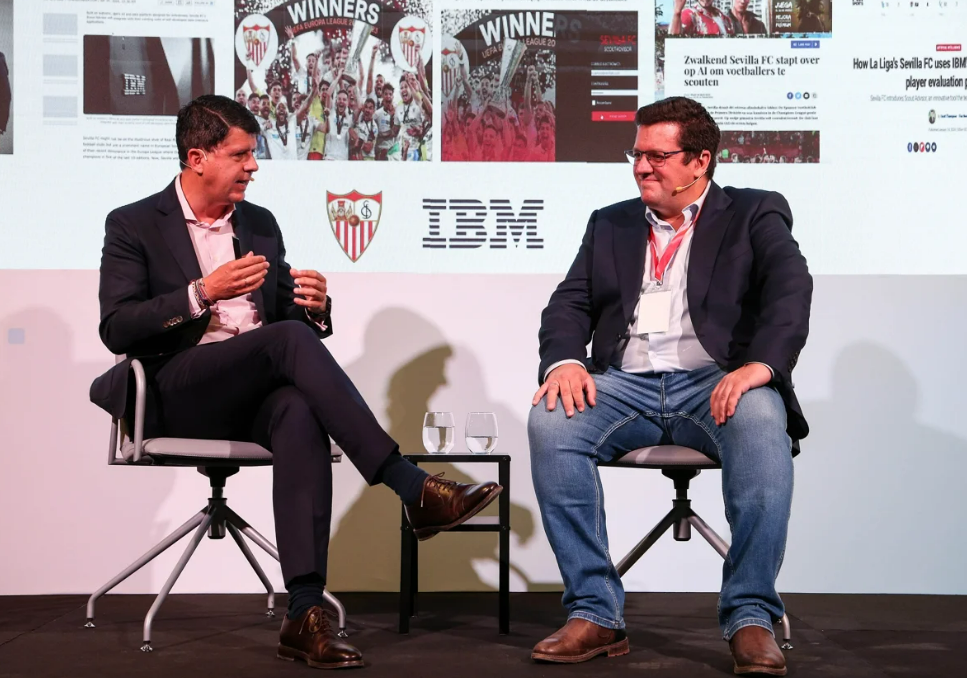
Sevilla FC has once again showcased its commitment to technological innovation, this time in its own city, as one of the speakers at the Technology Day Sevilla event organized by ABC and IBM. In this context, the club’s Chief Technology Officer, Elías Zamora, and Fernando Suárez, Director of Software at IBM for Spain, Portugal, Greece, and Israel, presented the joint work to develop the Scout Advisor tool.

In this regard, Sevilla FC’s data department, in collaboration with IBM’s Client Engineering team, developed the Scout Advisor tool. This solution leverages natural language processing and watsonx foundation models to explore and analyze large volumes of information stored in the club’s player scouting report databases, with the aim of assessing potential signings. The system integrates both quantitative information —such as height, weight, speed, goals, or minutes played— and unstructured qualitative content, including textual analyses found in more than 200,000 scout reports.

Posted on

Video analysis has become an essential tool for football professionals.

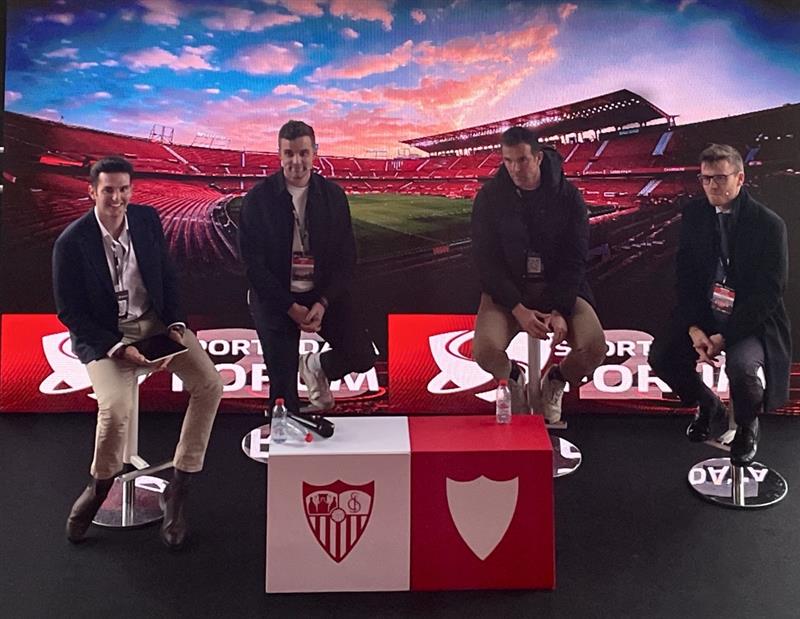
Former footballer Carlos Marchena spoke about how video analysis can help convince players about performance improvement. “The image leaves no room for doubt,” he stated. “Sound is also very important—observing how much time you spend talking during training sessions,” Marchena continued, referring this time to the work of coaches.

Reflecting on his past, Marchena recalled that video analysis was not commonly used in his early days as a player. “Video was not worked on before; there was no trust in it. Full matches were played without analysis. But video is a tool that helps a lot, especially when you come to understand it with maturity,” he added. Now, in his academy, he actively uses video to record matches, later analyzing and observing the behavior of both coaches and players.

José María Cruz followed up by addressing the accessibility of video analysis tools. “I see the process as very accessible, especially for amateur teams. Self-financing tools and content creation allow for cost-effective, creative, and innovative storage solutions.” Beyond that, he highlighted the importance of providing meaningful feedback. “It’s not just about sending a document; an in-depth analysis must be conducted. Educating players on the correct use of the tool and creating content to enhance performance is crucial,” he added.

To conclude, Javier Pichel emphasized the evolution of processes and how video analysis has become a fundamental method for improving player performance. He encouraged all teams to take advantage of technological advancements to enhance their performance, regardless of the club’s size, as these technologies are increasingly accessible.

Video analysis is no longer a tool of the future; it has firmly established itself in the present, where technology provides added value to football, significantly enhancing the performance of both players and coaches.

Posted on

New edition of the SPORT DATA FORUM 25 at the Ramón Sánchez Pizjuán

The SPORT DATA FORUM 2025 (SDF 2025) is organized by Sports Data Campus, with the key collaboration of Sevilla FC and the Catholic University of Murcia (UCAM). This one-year program will kick off with an in-person session at Sevilla FC’s iconic stadium, followed by monthly online sessions every Monday until February 2026, enabling global and continuous participation.

It has become a tradition for Sports Data Forum editions to begin at Sevilla FC’s facilities, and 2025 will be no exception. This year’s edition, one of the most important events in the field of sports Big Data, will launch at the Ramón Sánchez-Pizjuán Stadium on March 20. The opening session will feature over ten hours of debates, conferences, and interactive activities. Tickets are available here.

As always, SDF 2025 will welcome international experts who will discuss innovative topics, present real-world case studies, and analyze the impact of data analytics on sports performance and strategic decision-making. This event is an essential opportunity for professionals and enthusiasts passionate about the intersection of technology and sports, offering a comprehensive perspective on current and future trends in sports analytics.

Posted on Leave a comment

Closing Ceremony of the Master in Big Data applied to Scouting in Football at the Pizjuán

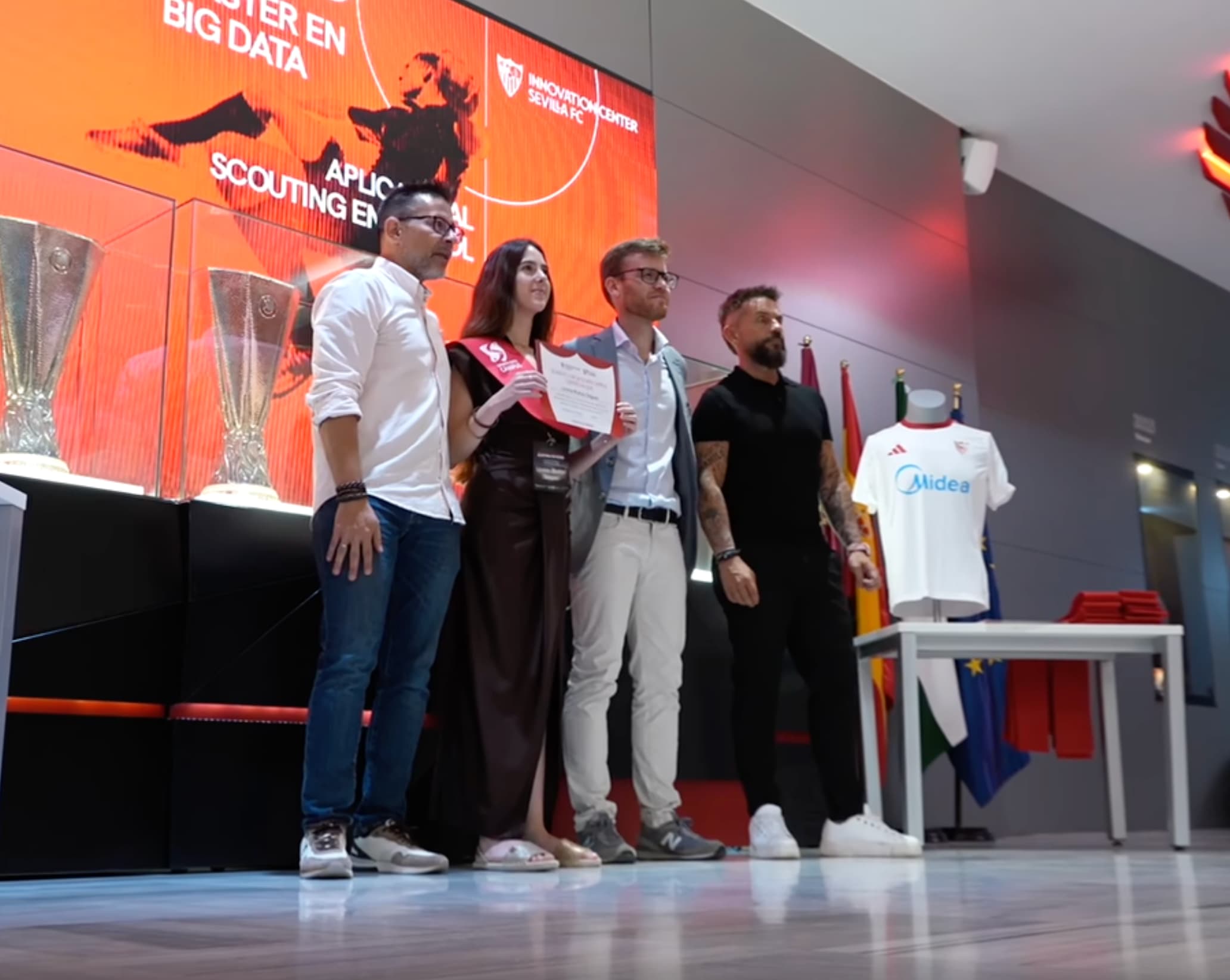
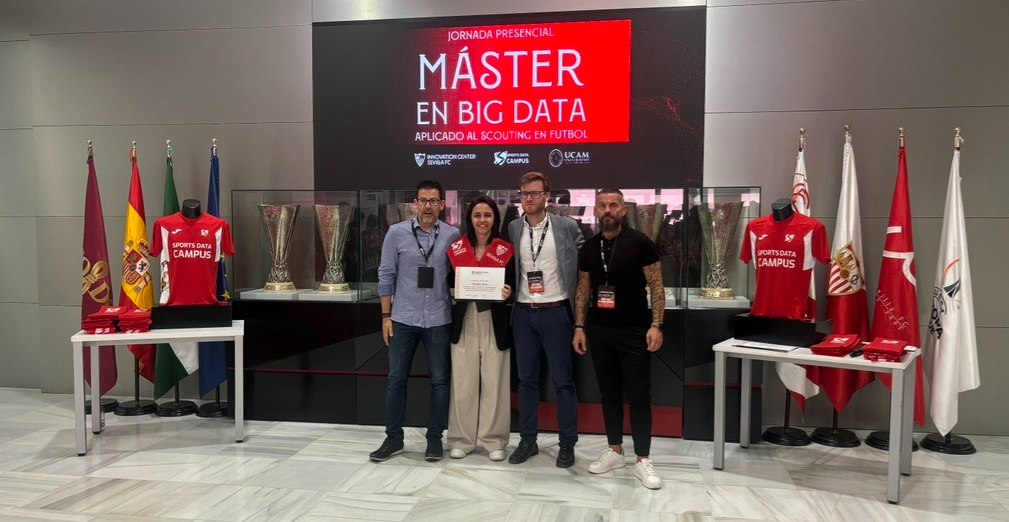
The Ramón Sánchez-Pizjuán once again hosted the closing ceremony of the Master’s Degree in Applied Big Data for Scouting in Football, one of the flagship courses promoted by Sevilla FC’s Innovation Center as part of its increasingly extensive educational offerings. Students from the last two editions had an in-person session in the heart of the Sevillista temple, specifically in the José Antonio Sánchez-Araujo press room, where, among other professionals from the club, they received a masterclass from the club’s sporting director, Víctor Orta.

Additionally, during this closing ceremony, all the master’s students received a commemorative sash for completing the course in the stadium’s ante box, alongside Sevilla FC’s seven Europa League trophies won to date. All the students completed the day by enjoying the Stadium Tour of the legendary Sevillista stadium.

The master’s program is organized by Sport Data Campus, in collaboration with the Catholic University of Murcia (UCAM) and the Sevilla FC Innovation Center, and enables professionals to acquire all the necessary knowledge to organize a top-level ‘data-driven’ sports management. Registrations for the VII edition, which will run from October 2024 to June 2025, are now open.

Posted on Leave a comment

Spectacular start to the 2024 Sports Data Forum

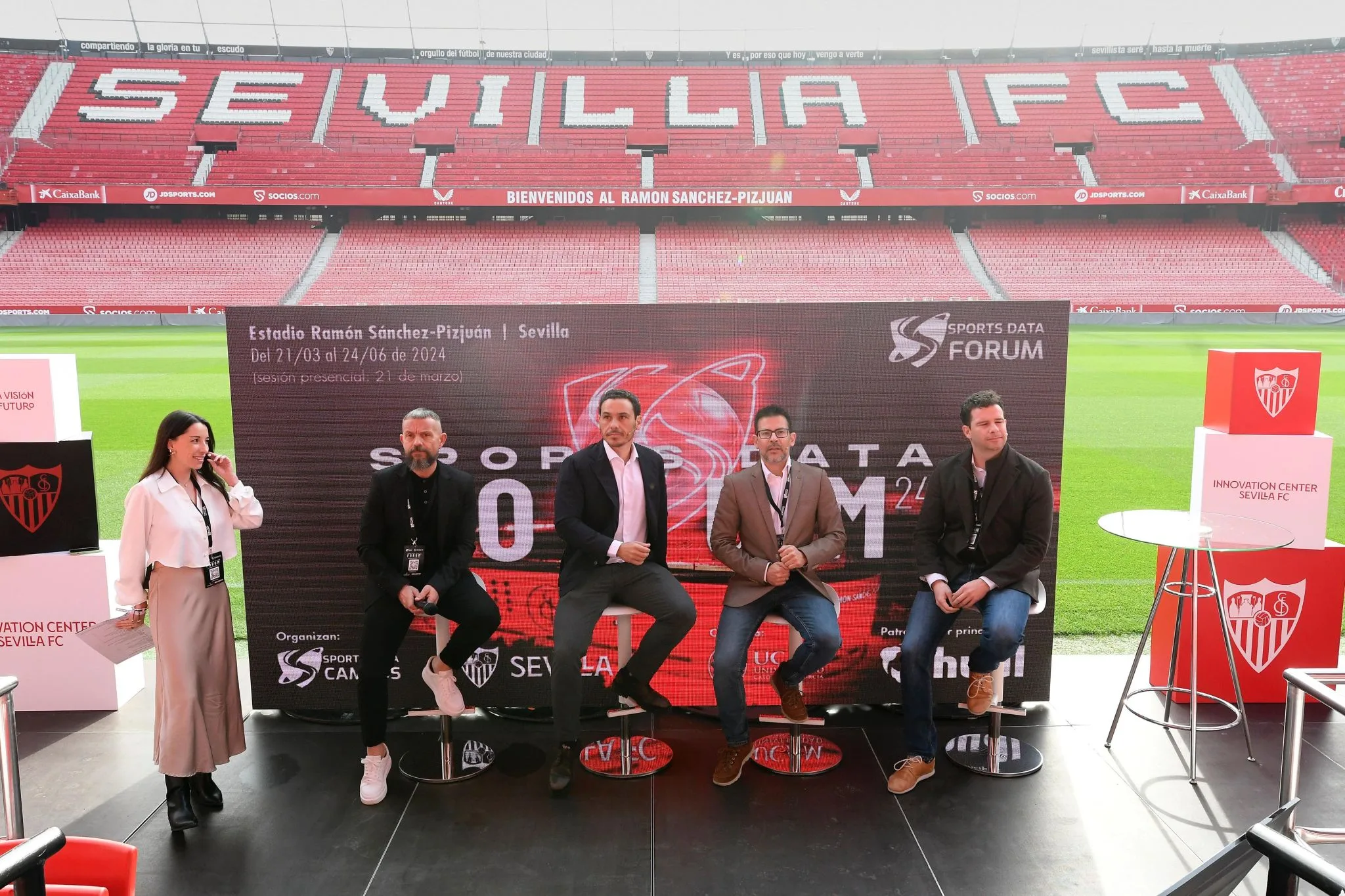
The 2024 edition of the Sports Data Forum kicked off this Thursday at the Ramón Sánchez-Pizjuán Stadium with an inaugural session that brought together over 500 attendees, including various students from the different master’s programs promoted by the Innovation Center of Sevilla FC, Sports Data Campus, and the Catholic University of Murcia (UCAM). The opening session was held in person and featured the participation of Sevilla FC President, José María del Nido Carrasco, and Sevilla’s sporting director, Víctor Orta.

The club’s president, alongside José María Cruz Gallardo, the head of Football R&D at Sevilla FC, officially welcomed all present, highlighting that the Sevilla FC Innovation Center is a pioneer in Spanish football, having received the category and license as an authorized sports teaching center, and emphasizing the club’s commitment to technological development. Through the Innovation Center, Sevilla FC aims to share with third parties, who are not direct competitors, all the knowledge acquired over the years.

One of the avenues for this sharing is the educational offerings provided through the Innovation Center, as explained by Juan Esteban Gómez Llamas, the head of Digitalization and Continuous Improvement at Sevilla FC: “Through the Sports Data Campus, one of our educational partners, we offer two master’s programs: Big Data in Scouting and Innovation and Technology in Sports Entities.” Víctor Orta took the opportunity to deliver a masterclass and moderate a panel discussion on the use of data in football analysis.

Posted on Leave a comment

Record number of registrations for the 5th Master’s in Big Data.

The sports management is one of the fundamental pillars on which a football club is built, and its adaptation to handling large-scale data is essential today. For this, the work of scouts and analysts is crucial, as they are key personnel in decision-making, and their training is increasingly in demand. Sevilla FC, through its Innovation Center and in collaboration with the Catholic University of Murcia and the Sports Data Campus, co-organizes one of the most reputable training programs in this area: the Master’s in Big Data applied to scouting in football.

It has been three years since the start of this training, and its fifth edition will begin on October 24 with a record number of enrollments. The number of students has increased by a remarkable 35% compared to the fourth edition. This number could increase further, as the enrollment period is still open. Enrollment can be formalized through this link. Master’s in Big Data applied to Scouting in Football in collaboration with Sevilla FC – Sports Data Campus.

The training aims to equip the scouts of the future with the use of digital tools that optimize their work process. An essential matter at a time when there is much discussion about technology, AI, and their impact on workplaces. It represents a development of the professional profile of the scout, enabling them to remain relevant in the market. So far, more than 300 students have completed this prestigious master’s program, providing students with the necessary knowledge to form a ‘Data-Driven’ sports management.

Over the past four editions, students have had the opportunity to do internships in the Data and Analysis departments of Sevilla FC, access internships and job opportunities at other clubs, and develop incredibly interesting final master’s projects.