Posted on

César Azpilicueta emphasizes the importance of data and video analysis in modern football

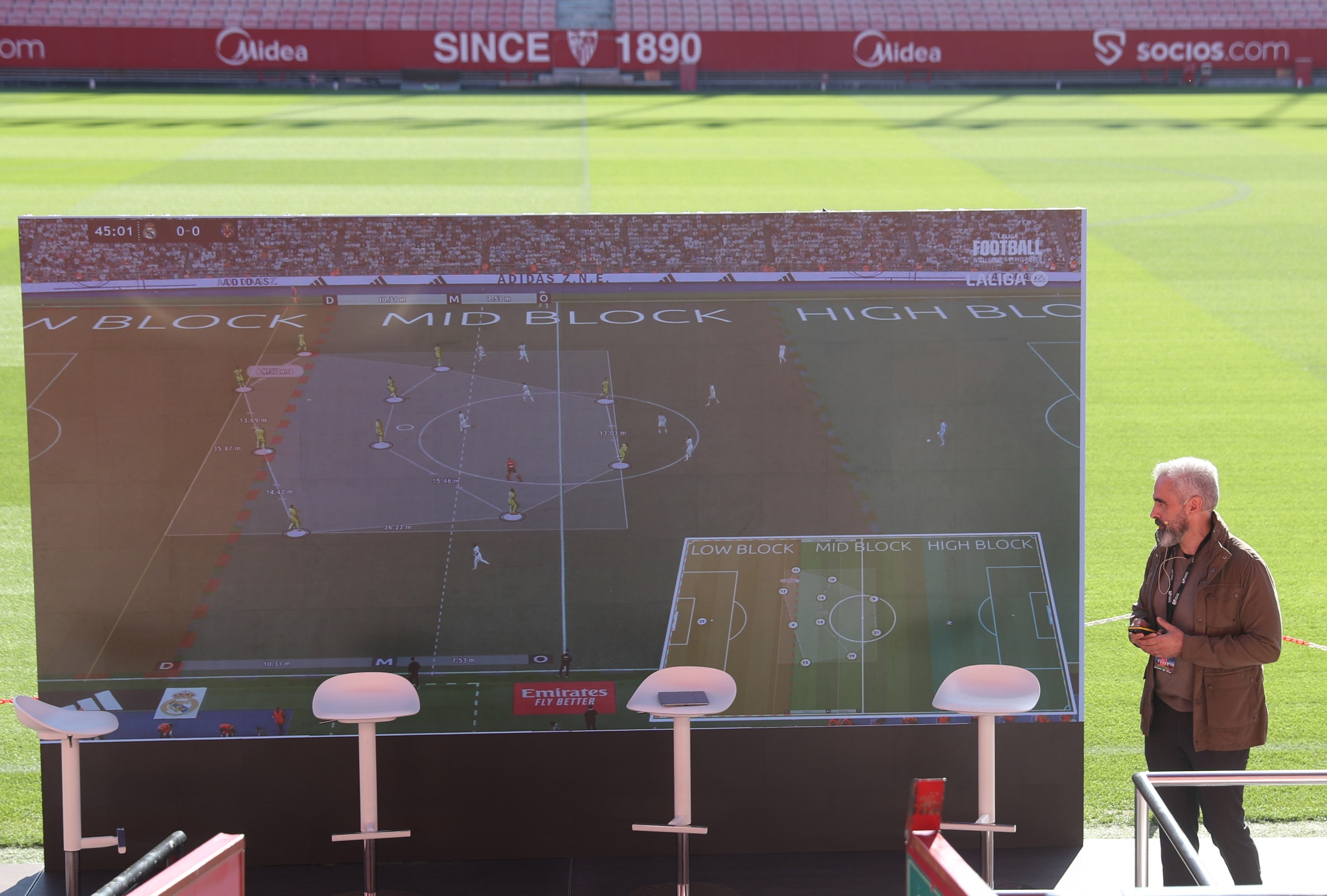
César Azpilicueta began his career in the Club Atlético Osasuna academy, debuting at 17 in the Copa del Rey. Since then, he has witnessed a major evolution in the use of data analysis, moving from basic tools to comprehensive monitoring of players and performance.

For César, data is essential for opponent analysis, helping to identify advantages that can be decisive during matches. He combines this information with video analysis, focusing especially on players in his rival’s positional area. According to his experience, data also helps verify performance post-match or spark debate when opinions differ. The key is finding a balance between objective and subjective information, avoiding data overload.

Azpilicueta has played in multiple positions and encourages teammates to experiment in different areas, discovering new strengths. He started as a forward and has gradually played as a right-back or center-back, in both 3- and 4-man defensive lines. Video analysis is crucial to identify details that inspire these positional changes.

Finally, César emphasizes that the most important aspect of analysis is providing context to information, ensuring it is clear, concise, and progressive to accurately measure development and strategy implementation.

Posted on

SkillCorner revoluciona el análisis del fútbol con tracking automático y nuevas métricas avanzadas

La compañía francesa SkillCorner, creada en 2016, se ha consolidado como uno de los referentes internacionales en el análisis de datos en el fútbol gracias a su sistema de tracking automático desde broadcast, capaz de capturar información sin ningún tipo de intervención humana.

Con presencia en más de 130 competiciones, incluyendo ligas como la Premier League, MLS o incluso la NFL, la empresa destaca por la alta fiabilidad de sus datos y su constante evolución tecnológica.

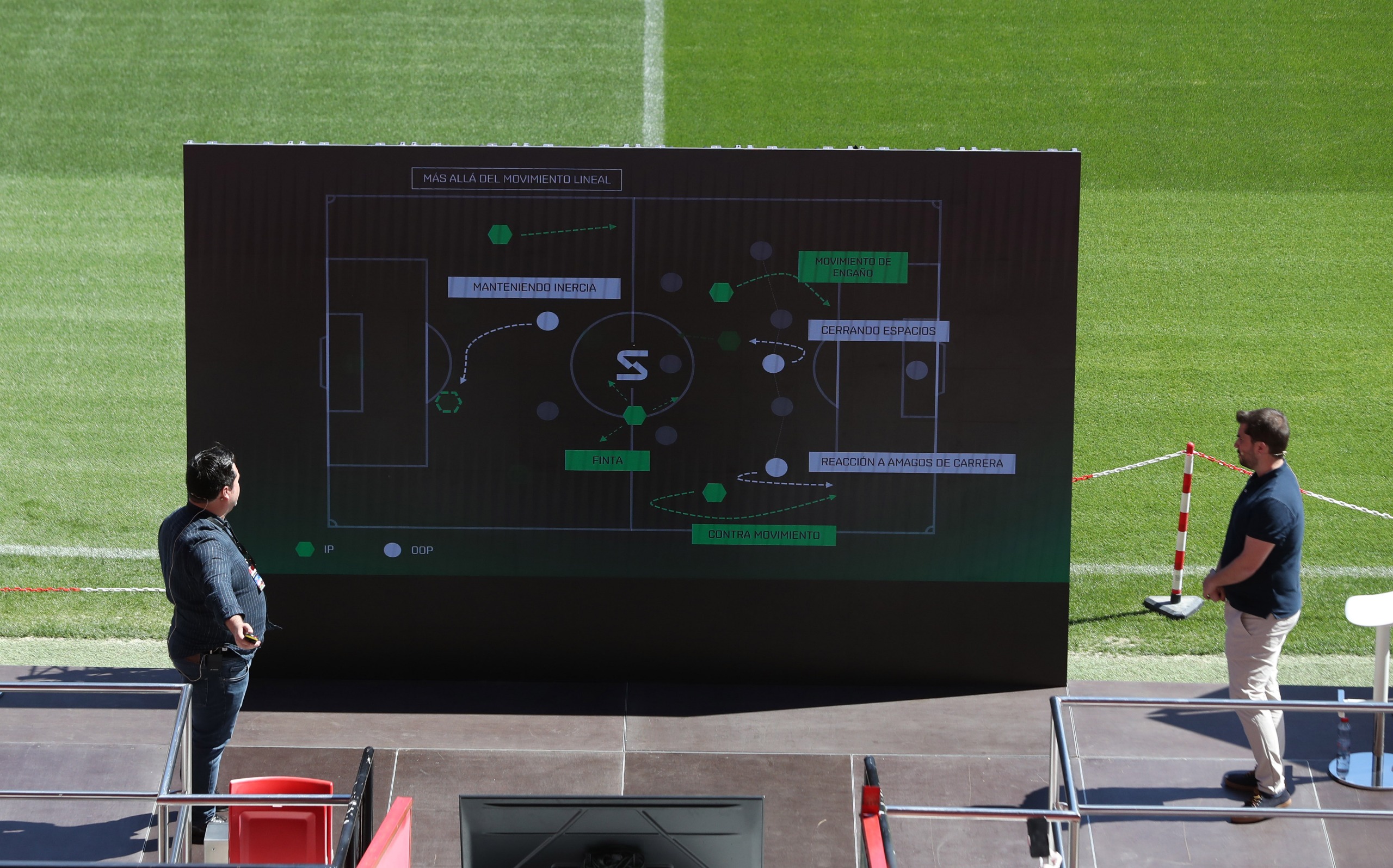
A diferencia de los proveedores tradicionales, centrados en eventos como el pase o la recepción, SkillCorner introduce una capa adicional de análisis basada en el contexto del juego, detectando en tiempo real aspectos como líneas de pase, carreras sin balón o movimientos paralelos a la acción, tanto en fase ofensiva como defensiva.

Su modelo se estructura en tres grandes bloques de datos: datos físicos, game intelligence y tracking XY, lo que permite un análisis integral del rendimiento. Entre las métricas más innovadoras destacan la explosividad, la aceleración hasta velocidad de sprint y la agilidad, esta última con especial énfasis en los cambios de dirección, incluyendo engaños y fintas, superando el análisis lineal tradicional.

Además, la plataforma permite evaluar el rendimiento en términos de volumen e intensidad, ofreciendo rankings detallados, percentiles y una contextualización avanzada de cada acción. Esto mejora la precisión en la definición de perfiles de jugador, reduciendo la pérdida de talento en los procesos de scouting y facilitando la identificación de perfiles específicos, como el de extremo explosivo.

En situaciones sin posesión, SkillCorner también aporta valor mediante la contextualización de acciones como la presión, los duelos o los movimientos que superan líneas defensivas.

En el ámbito del scouting, la herramienta permite realizar simulaciones de fichajes, filtrando jugadores por perfil, liga o estilo de juego, e incorporando comparativas entre competiciones y temporadas. Cada jugador seleccionado puede complementarse con un informe visual automatizado, generado a partir de datos XML, que resume en pocos minutos sus principales características en contexto real de juego.

De cara al futuro, la compañía prepara importantes mejoras en sus tres áreas clave, incluyendo una nueva forma de medir la velocidad máxima y una evolución en métricas como “playing under pressure 2.0”, que amplía los niveles de análisis y la contextualización de las acciones bajo presión.

Posted on

SkillCorner transforms football analysis with automated tracking and advanced metrics

French company SkillCorner, established in 2016, has become a global reference in football data analysis thanks to its fully automated broadcast tracking system, capable of capturing data without any human intervention.

With coverage of over 130 competitions, including the Premier League, MLS, and even the NFL, the company stands out for the high reliability of its data and its continuous technological development.

Unlike traditional providers focused on events such as passes and receptions, SkillCorner adds a new analytical layer based on game context, detecting in real time elements such as passing lanes, off-ball runs, and parallel movements, both in offensive and defensive phases.

Its model is structured around three main data categories: physical data, game intelligence, and XY tracking, enabling a comprehensive performance analysis. Among its most innovative metrics are explosiveness, time to reach sprint speed, and agility, with a strong focus on change of direction, including feints and deceptive movements, going beyond traditional linear analysis.

Additionally, the platform evaluates performance through volume and intensity, providing detailed rankings, percentiles, and advanced contextualization of each action. This enhances accuracy in defining player profiles, reducing talent loss in scouting processes and improving the identification of specific roles, such as the explosive winger profile.

In off-ball situations, SkillCorner also delivers valuable insights by contextualizing actions such as pressing, duels, and movements that break defensive lines.

From a scouting perspective, the platform enables recruitment simulations, allowing users to filter players by profile, league, or playing style, while incorporating cross-competition and multi-season comparisons. Each selected player can be supported by an automated visual report, generated from XML data, summarizing key attributes within real match scenarios.

Looking ahead, the company is set to introduce major updates across its three core areas, including a new approach to measuring maximum speed and further development of “playing under pressure 2.0”, expanding analysis levels and contextual depth in pressure situations.

Posted on

Esteban Granero, Artificial Intelligence as a Competitive Advantage in Football Decision-Making

He begins by explaining his early interest in data, which emerged after suffering a serious knee injury. He has a particular focus on the transfer market, both from a sporting and financial perspective, seeking potential profitability.

He outlines his view of the club as a business tool, where players are treated as assets to be bought and sold. In this context, he sees technology as an opportunity to make the entire process more efficient. Olocip was born from the research of this approach, evolving over the past 10 years into the company it is today.

From a human perspective, the goal is to mirror the process carried out by artificial intelligence: observing, understanding patterns, and attempting to predict what may happen in the future, always considering the possible pathways ahead.

By combining data with predictive models, it is possible to reduce uncertainty, placing greater emphasis on future projections rather than solely on past data—although these predictions are not infallible. There has been a significant evolution in data collection, from manual observation in earlier stages to today’s automated and autonomous systems, where cameras and image-based technologies capture detailed information.

Once the data and algorithms are developed, Olocip creates tailored solutions for its clients based on their specific needs. It is important to emphasize that these tools are not designed to replace human decision-making, but to support and enhance it.

Additionally, artificial intelligence helps improve accessibility and interaction in a more efficient way, significantly enhancing the user experience. As a result, information can be presented more clearly, allowing clubs to access it in a more intuitive and engaging manner.

The goal of AI is not merely to describe information, but to explore ways of providing solutions and increasing the reliability of decision-making processes. AI serves the sports industry and must continue to adapt in order to gain the trust and support of those who are still distant from it. It holds enormous potential, although it also has certain limitations.

Even so, its evolution is exponential, and it will gradually begin to perform tasks that currently seem unthinkable. Those who understand how to use AI and recognize its importance will find it easier to continue developing professionally, while those who do not may gradually fall behind. Ensuring access to information will be key to avoiding significant disparities between individuals.

Posted on

Roberto del Campo explores decision-making in football through data analysis

Roberto del Campo delivers a session focused on the importance of data applied to training and its direct impact on performance, highlighting that while squad quality influences results, it is the daily processes that make the difference between teams with similar characteristics.

During his presentation, he emphasizes that data informs, but it is the coach who ultimately makes decisions, underlining the importance of interpretation and contextual understanding in professional football.

He also introduces the concept of “TAC ROM” (Tele Assistant Coaches), inspired by VAR, proposing a system that could support coaching staff in real-time decision-making from the bench.

From a technological perspective, he highlights the differences between GPS and tracking systems, stressing the need to correct discrepancies, apply scientific methods and reduce data bias.

Roberto del Campo also focuses on the need for individualized analysis, explaining that football demands vary depending on position, physical profile, opponent, playing style and match context, requiring tailored approaches.

He concludes by stating that comparison in football is complex and must always consider the context of the game, emphasizing that data alone is not enough without a proper methodology. In this regard, he notes that data does not change the cards you are dealt, but it does change how you play them.

Posted on

Sevilla FC hosts the institutional opening of the 10th edition of the Sport Data Forum


The event continues to establish itself as a key meeting point for data, technology innovation and education in the sports industry

Sevilla FC hosts the institutional opening of the 10th edition of the Sport Data Forum, an event that continues to establish itself as a benchmark in Big Data, artificial intelligence and innovation applied to sport.

The session features José María Cruz Gallardo, Head of Sports Innovation at Sevilla FC; David Sáez, CEO of Sport Data; Miguel del Campo, Programme Director at Sport Data Campus; and Enrique Palenzuela, Marketing Director at UCAM.

David Sáez opens the session by thanking Sevilla FC, UCAM, the sponsors and especially the students, highlighting the key role they play in the development of the project.

José María Cruz emphasizes that this tenth edition takes place in a pivotal moment for the industry, noting that it is “the year in which the context is changing the most from one Sport Data Forum to another”, mainly due to the evolution of artificial intelligence. He also highlights the importance of relying on technology while maintaining the value of a strong human team.

From UCAM, Enrique Palenzuela highlights the collaboration with the club and states that the Sport Data Forum is “the leading Spanish-speaking event in the data industry”. He also underlines the growth of the educational project, now reaching 17 international master’s programmes developed together with Sport Data Campus in Spanish, Portuguese and English.

Miguel del Campo closes the institutional session by thanking the students for their presence and Sevilla FC for its commitment to an event that reaches its tenth edition, reinforcing its position as a leading platform in data education in professional sport.